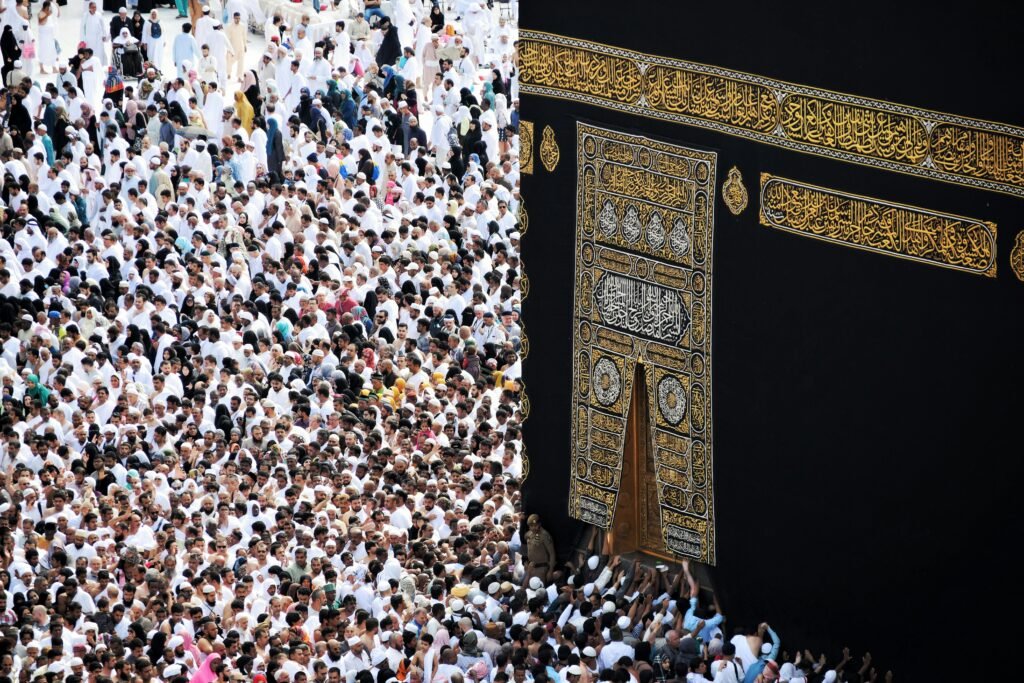
Have you ever noticed that Muslims travel to Makkah (Mecca), Saudi Arabia every year? Many wonder why this happens. Here’s the explanation:
In the religion of Islam, there are five pillars — fundamental obligations that every Muslim must fulfill. One of these is Hajj, the pilgrimage to Makkah. It is a religious duty for every Muslim who is physically and financially capable to perform it at least once in their lifetime.
In the Holy Quran, Allah commands:
“And [due] to Allah from the people is a pilgrimage to the House — for whoever is able to find thereto a way.”
(Surah Aal-e-Imran, 3:97)
This means that performing Hajj is compulsory for those who have the means and ability
Regardless of your location, performing hajj is compulsory as long as the person is financially and physically fit. That is why millions of people around the world visit the Kaaba and perform hajj every year. The rites of Hajj trace back to Prophet Ibrahim (AS), who was commanded by Allah to call people to pilgrimage.
In the Holy Quran, Allah says
“And proclaim to the people the Hajj [pilgrimage]; they will come to you on foot and on every lean camel; they will come from every distant pass’
(Surah Al-Hajj 22:27)

Benefits and Significance of Hajj
Let’s look at some of the great benefits Muslims gain by going for Hajj:
- Fulfilling Allah’s Command
By performing Hajj, a Muslim completes one of the five pillars of Islam and obeys the order of Allah. - Complete Forgiveness of Sins
Prophet Muhammad (peace be upon him) said:
“Whoever performs Hajj and does not engage in obscenity or sin, he returns like the day his mother gave birth to him.”
(Sahih al-Bukhari) - Unity of the Muslim Ummah
Hajj brings together Muslims from all corners of the world, regardless of race, color, or nationality, promoting brotherhood and equality. - Learning Islamic History and Heritage
Pilgrims get the chance to visit sacred places in Makkah and Madinah, learning about the life of Prophet Muhammad (peace be upon him) and the early history of Islam.